Ludus Mercurii

Seen on itch: _ Ludus Mercurii_, an Ars Magica computer game currently under development:

https://dragynrain.itch.io/ludus-mercurii

While the focus is on a roguelike faerie dungeon the magus enters every winter, there's obvious potential for the author to adapt the core seasonal labwork engine for other things later.

10 Likes

Thanks for noting this.

1 Like

Hey guys!

I’m the one creating Ludus Mercurii so if you have any questions or feedback, I’m here and open to ideas!

Thanks for linking the itch.io !

15 Likes

I posted a couple of blog posts on itch with what’s been finished so far - and what I’m working on currently.

Check it out here:

https://dragynrain.itch.io/ludus-mercurii/devlog/1429189/what-im-working-on-now

6 Likes

This looks interesting!

Technical question: How are you handling the licensing? We don't, I think, have any examples of how to integrate the background into a computer game yet.

1 Like

Just trying to follow the Open License terms the best I can! I’m aware of some specific names/phrases that have limitations. Am I missing something background-wise that might be problematic?

So, is the entire game licensed under CC BY-SA? That would be the easiest way to follow the license.

I’m treating the Ars Magica 5E-derived game content as CC BY-SA 4.0 with proper
attribution and required notices. Where parts are not derived from ArM5E material (for example,
engine/tooling or separate original assets), I’m going to label those clearly so there is no
licensing ambiguity. If there is any preferred guidance from Atlas on handling “background” use in
computer games, I’m also very happy to align with that!

That sounds right, but my technical question wasn't clear enough: how are you doing that? For example, it looks as though you are implementing Ars Magica mechanics in code. That code should, on the face of it, be CC BY-SA as a derivative work, but it is not obvious to me how to state that in a way that is clear to the end-user. Text and art is easier for me to imagine, because it can work the same as a book ("All text and art apart from [list of public domain/stock art images] are licensed under CC BY-SA"), but my limited experience of coding (not zero, but very definitely limited) does not suggest an easy parallel.

As the first one we know about, you have the chance to help shape community preferences!

1 Like

If I were to write code to handle exploding dice, I’m not sure that would be derivative work. There’s the concept of reverse-engineering from a clean slate which might apply here.

You could argue that Creo / Herbam is some sort of “trade dress“, but the underlying concept of Spell Casting Total might not.

You see lots of reuse of mechanics across boardgames and rpg. There’s a whole discussion about algorithm vs implementation to be had and I don’t know how it should apply for ArsMag.

If you put it under BY-SA, you are definitely in the clear — if it isn't derivative, you were fine to start with, and if it is, you now have permission under the licence.

If you want to carefully split off the things that do not need to be covered, then you need to talk to a lawyer who specialises in intellectual property law as it applies to games. I think they are both quite busy… :wink:

1 Like

I would point out (some IP law background here) that, to a first approximation, mechanics are not covered by copyright. Copyright only covers the artistic or literary expression of an idea.

Mechanics might be covered by copyright only insofar they recreate a specific "experience" unique to a particular game. For example, if I recall correctly there was a ruling against a chinese game company a few years ago that took a card game from an Italian game company, with each player choosing one of half a dozen gunslingers in a western setting. Each of those gunslingers represented a certain archetype (the honorable guy, the femme-fatale, the criminal employing dirty tricks etc.) and had its own mechanical tricks that embodied that archetype. The chinese company reset the entire game in a wuxia setting, redrawing the art, but keeping exactly the same archetypes and the same mechanics. The Italian company sued, and eventually won (it could just as easily have lost, in my view), because those mechanics were deemed to produce a sufficiently original literary/artistic rendition of the fight between those archetypal warriors to fall under copyright protection.

However, I think that the Ars Magica mechanics themselves (basically, take a bunch of integers representing capabilities and positive/negative circumstances, add a die, and compare to a target number) would fall well below the mark in this regard. If you want to be paranoid about this, put the exact parameters (basically, the formulas) in a file that is CC-BY-SA, and have generic code that reads those parameters and implements them. Then the code definitely is not derivative work. It's also better design from a software engineering perspective, that allows you to reuse the engine for other games using different but similar task resolution rules.

4 Likes

That’s the exact model I have been working under. Keep things like the formulas in separated data files governed by CC-BY-SA, and code reads from those parameters for implementation in engine. Any game “data” like virtues/flaws, spell details/descriptions, spontaneous spellcasting guidelines, etc. would all be handled similarly. The good news of that is if I eventually expand by adding new original virtues/feats, spells, etc. that would all be covered by CC-BY-SA and then usable by others as well.

I know copyright and trademarks are a complicated issue and I’m definitely not a lawyer, but nothing is set in stone on my side, and I’m always happy to work with Atlas however I can to make sure everything is as it should be!

Which is why you should put them under CC BY-SA in your Ars Magica work unless you can afford to consult a lawyer, and then potentially fight a court case.

That rather suggests that an implementation of the whole Ars Magica mechanics is covered by copyright. The Italian company won, so there is now a precedent that a full mechanical system is protected. (In which jurisdiction did they win?)

I, personally, would risk an implementation of the stress die. I am not a lawyer, this is not legal advice, but I am pretty sure it is not protectable. An implementation of Hermetic magic? I would definitely put that under BY-SA.

OK, that sounds good. Clean and easy to understand. Thank you!

Not necessarily. For one, it would be Atlas who would have to bring the court case against you, and spend the money to do so, for very uncertain gains. Just to put things into context, Columbia Games and the (estate of) the creator of Harn have been discussing rather acrimoniously for decades whether Columbia was actually violating copyright, Columbia keeps selling Harn products, and yet they have never gone to court precisely because of the expense involved. And I think almost any secondary product made for Ars Magica is worth less money, and thus is less likely to bring up a fight.

No, it does not work that way, and I am sorry if I have given the impression it did. There is ample precedent that mechanics are not protected, in fact. This one case, to the best of my knowledge, is the furthest that they went in being protected, Besides, it's a bit iffy as a ruling (and it may well have been overturned since) and the court went out of its way to explain that the ruling depended on those mechanics recreating in a very original way an 'experience' of the stereotypical one-on-one duel. Technique + Form + modifiers to cast a spell? I would bet it would lose in court, though strange stuff can always happen.

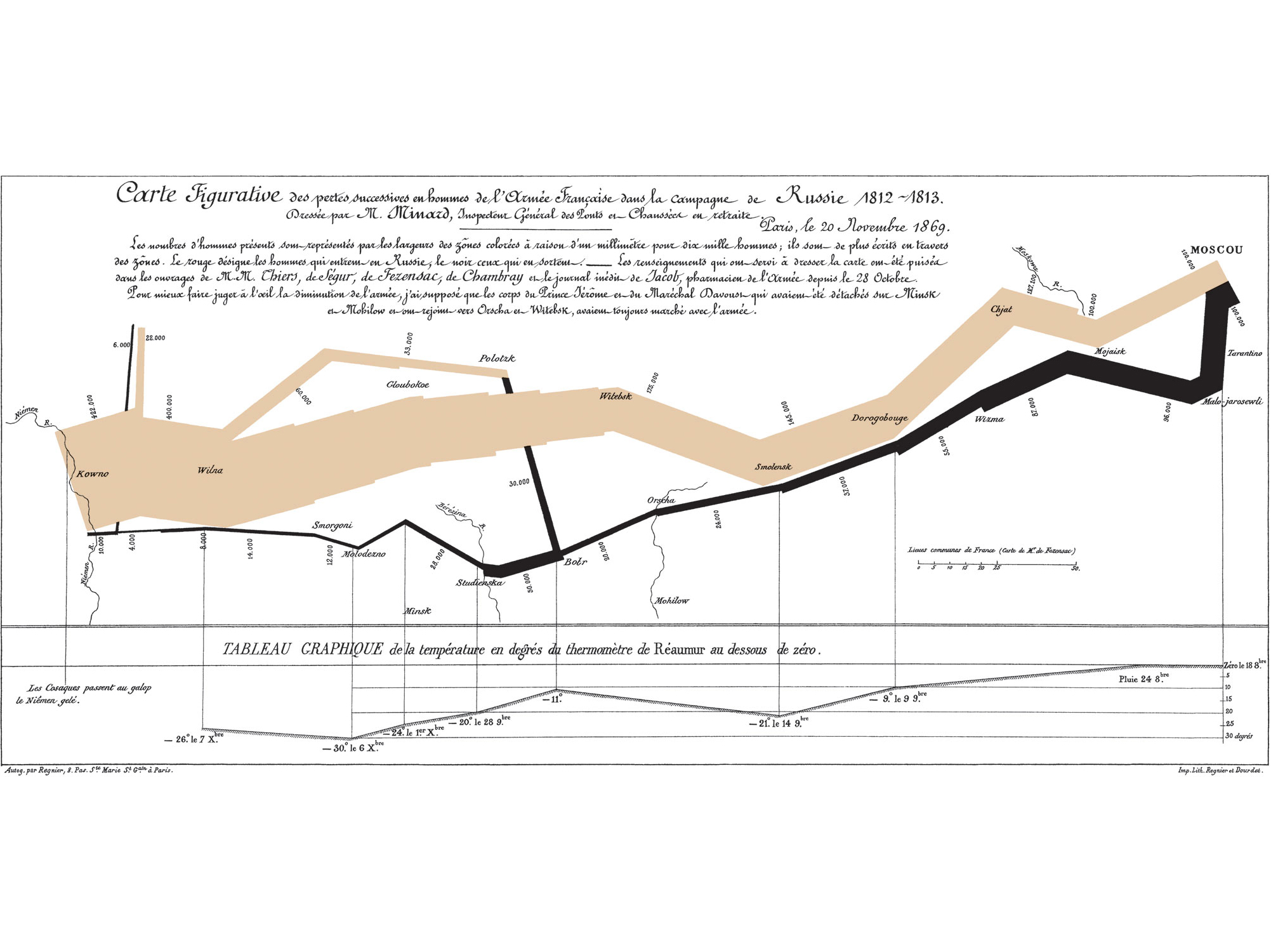
Remember, copyright protects the literary and/or artistic expression of an idea, it does not protect the idea itself. The fact that you can decompose the world in 10 Forms and 5 Techniques and cast magic depending on how strong you are in the relevant Form/Technique is the idea, and that cannot be protected. Very much like a play-dirty criminal using distraction, intimidation etc. to win a gunfight is the idea. Now, if you show that there's a 'mechanical execution' of that idea that makes whoever experiences it to go 'oh wow, that's so elegant, it really captures the spirit of the scene in a way I would have thought impossible', then that might win you a court case. If it's sufficiently straightforward that most people would have effortlessly recreated it in roughly the same way, no protection. That's why the typical pie-chart in some financial publication of some financial data is not protected by copyright, and while it's good form to ask permission to reuse it, it's not strictly necessary. The data are not protected, and making a pie-chart out of them is not sufficiently original to deserve protection. It takes something like the famous flow map of Napoleon's invasion of Russia to have copyright protection, precisely because given access to the same data, it takes a lot of skill to produce something as effective as it at conveying the idea (i.e. the data).

I hope I was clearer this time! This is stuff that all starts to 'click' once you have seen enough cases - though some rulings will always end up surprising you - but I understand it might feel a bit ... unfathomable to someone from outside the field, even someone very bright and strong in logic. In this, it's a bit different from mathematics.

Some USA court, I seem to recall.

2 Likes

So, for example, a mechanical execution that is universally recognised by experts in the field to be ground-breaking, still unsurpassed, and still massively influential across the whole design space might, possibly, be protected? You know, something like Ars Magica's magic system.

I know it would be uncertain. That's my point. If you put things under CC BY-SA, you are definitely safe. If you don't, you are relying on interpretations of law that are uncertain, that lawyers disagree on, and that courts disagree on — decisions do get overturned on appeal, or overturned years later when someone brings a similar case.

I don't think "Violate Atlas's copyright all you like; they can't afford to sue you" is a policy I can, in good conscience, recommend.

4 Likes

I posted some more details about myself and my design philosophy and what I’m trying to do with the game if anyone is interested! Also some bonus new placeholder art!

https://dragynrain.itch.io/ludus-mercurii/devlog/1450880/my-background-and-design-philosophy

5 Likes

A shame shield grogs aren’t there yet, but I love your ideas.

One the hard thing IMO is getting a good debugger for your yaml script. If others can enrich the game with their stories, that would allow you to concentrate on a better engine.

1 Like

If it’s cut and dried, your gains are certain. But how far do you have a leg to stand on? You are much better stating this is a question for lawyers rather than forcing CC BY-SA on an engine.

This looks like a great plan! I look forward to seeing the MVP.