Remixing the introduction adventures Promises, Promises & Nigrasaxa

Hi,

starting my 2nd Ars Magica Campaign (first one was a couple decades ago); we'll see if anyone else is ready to Storyguide this time. I've got quite a bit of experience in GM a number of other systems, as well.

So, my players decided on Stonehenge and, with all of them only a few years out of Gauntlet, I decided to check on the introductory adventures. Reading through Promises, Promises and Nigrasaxa, I came to the conclusion that they could be combined for better effect. Since they decided that they would like their Covenant to be a Lighthouse on the southern shore of England, I figured that we'll go with the modules mostly as written, but some modifications, and then let them start with a Spring Covenant created with the normal rules.

The basic plan is as follows: Stephen Eruditus has collected them in Libellus, but goes to his Final Twilight. Then, start with part II of Nigrasaxa, just substituting in Stephen instead of Maximianus, and slightly modify rescuing the grogs from other covenant buildings instead of the of tower. Since I'm keeping Nigrasaxa as a covenant, I'll also insert other characters instead of William & Eleanor, but keep the rest as they don't seem to be mentioned outside the module.

Next, jump to the Promises, Promises part, where the threat of the Quaesitor forces them to get back the Stone of Guarding. After that, they'll spend a Season or three disbanding Libellus and relocating to the new site, where they will then play out part I from the Nigrasaxa module, gaining some contacts with a local lord and possibly the faeries as well.
I might also give them a Season or two before this to do miscellaneous stuff if they want, and possibly use part III of Nigrasaxa for their 1st Tribunal if they don't come up with their own issues before that.

So, I also have some questions, especially regarding the second part:

  • Are Quaesitor Timor & Flambeau Hoplite Cremate Spurios mentioned anywhere else? I'm assuming not, but I'd like to make sure.
  • How tied are Quaesitors to Tribunals? To let my players ignore them after this, I planned for these two to have come after Stephen from his previous tribunal of Rhine, perhaps to make a point, and then return there.
  • How badly does Stephen's charter break the Hermetic Code? The module treats it as a clear breach, but it seems a lot more arguable to me. (Not that fresh magi probably want to argue with two much more experienced ones...) The right to levy taxes etc. seems like the bit that most trods on the rights of mundane lords.

I'm also planning to add a bunch of details to fill up holes as I understand them; these may be somewhat handwaved in the background (unless the players want to try their luck)

  • What all Stephen has been doing & what happens to his inheritance.
  • Some negotiations with Nigrasaxa & Schola Pythagoranis on trading vis sources & other resources.
  • Collecting as many resources of Libellus as possible & moving them to the new site.

I'm also planning to collect all my notes and post them somewhere after I've run these, for others to use in starting a Stonehenge covenant if they so wish.

So, any questions, advice or recommendations?
Not run those two, but I would recommend having a look at

Orphans of merlin as an alternative setting for the Stonehenge saga, I really like it.

Judge Dread and the Hoplite Burn the Bastards? No, they aren't mentioned anywhere else…

If you haven’t got it already, @Einauge converted Nigrasaxa to 5th edition and posted it here: https://www.redcap.org/images/c/ce/Nigrasaxa_5e.pdf

if you are using Nigrasaxa for an American audience I recommend renaming the covenant, perhaps to its English translation of Blackstone or Blackrock. “Nigra” is very close to a very offensive word in English, and players can feel very uncomfortable saying “Nigrasaxa” aloud. You can avoid the whole issue by simply renaming the covenant.

I've have run Promisses, promisses so so so many times... Ars Magica is not a new player friendly system, but to my surprise this is and many people started playing not only Ars Magica, but also TRPG in general.

I made some changes, like the name of the abbout from Samson to Hugh for more historical accurecy (kind of as I just discovered this year), updated the characters for 5ed (only on paper) and so on...

I changed Timor a little: an old powerful Quaesitor, but an old Woman, with simple black robes, but the fabric of the robes are of very high quality. She is merciless but fair in accord to Jocelin

This last one is because, after many interactions, there are usually three endings: 1- the bad ending where players decide to attack the too (they don't have the character sheet, it is only stated that the players have not chance against them.... even inside the Aegis it seems?) 2 - The not so good ending where the players uncover what Stephen has done, but do nothing to resolve the situation and wait for the pair. Here Timor usually points out that the contract was with Libellus, they failed understand their responsabilities as members of the order, Timor stripes them of their sigil and they are effectivily treated as apprentices under her tutelage for one year with her as Praeco of Libelus. 3 - The good ending where the players uncover what happened, arrange a meeting with the abbot, undo the contract, get the stone back but return the cross and letters and mack a new and mundane contract (paying taxes in the form of local produce or copies of books) - the form of negotiation varies a lot. The cellar plot never was explored and the only time that the players explored the Prior plot the game ended in a worst version of the second ending.

For some years we are playing a saga at the Stonehenge Tribunal, and I learned a lot because of this. The narrator does not use modules, but used extensive research on local politics and the Heirs of Merlin. The "main" plot of this Tribunal, in our game, is that it is almost at total control of the Spinus Nigrus Covenant through playing dirty, and some other covenant trying to build an opposition. In this scenario the existence of Timor at Stonehenge does not make sense, but I kind of use this plot to give some reason for the too going to Libelus: Jocelin overheard magi of Spinus Nigrus commenting about the trip of the Quaesitor and her Hoplite, and rushes to alert Libellus, since he was always well threated there, but does not now nothing about the accusation.

So Timor and Cremate Spurios are "promises, promises" only. Jocelin seem to be different in the "promises, promises" and the "Heirs to Merlin"

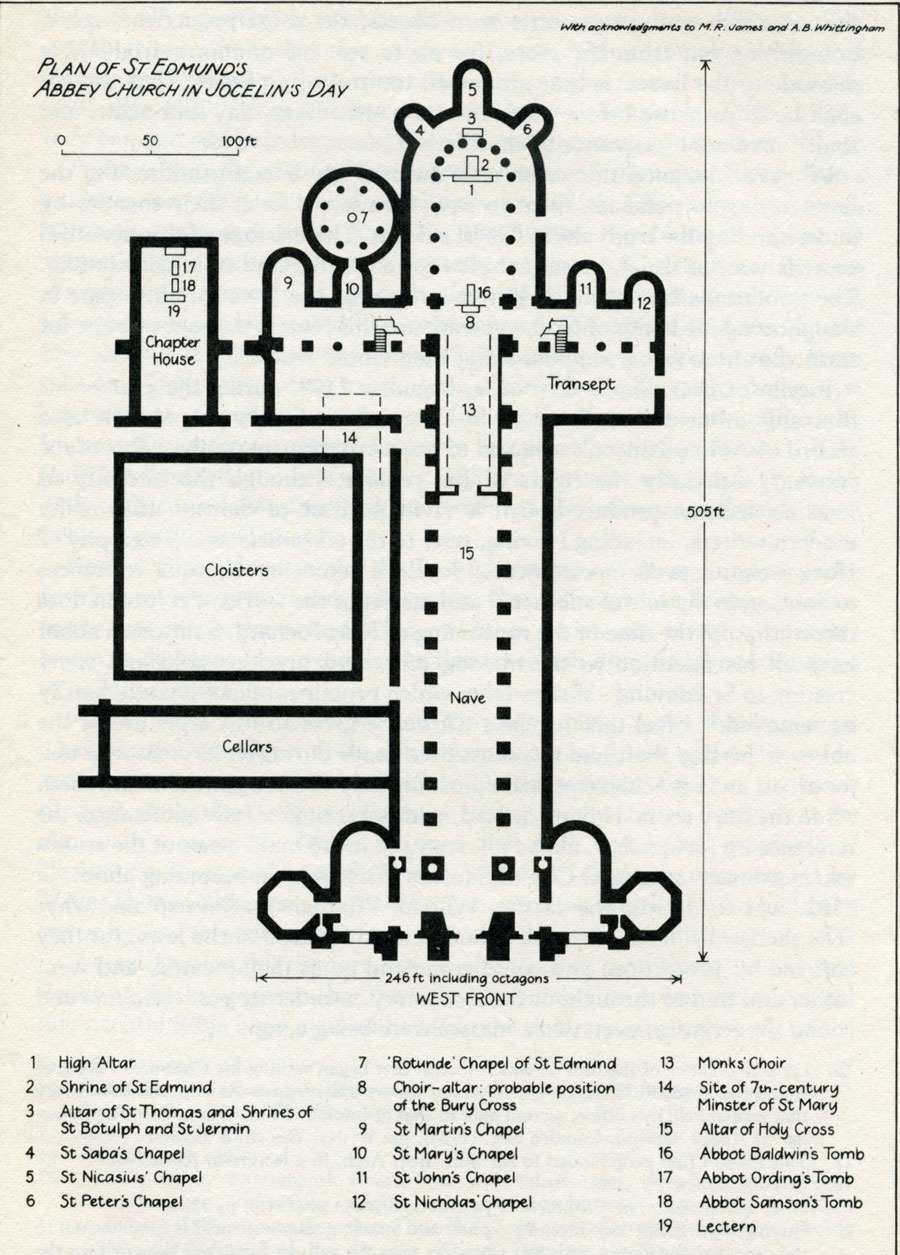
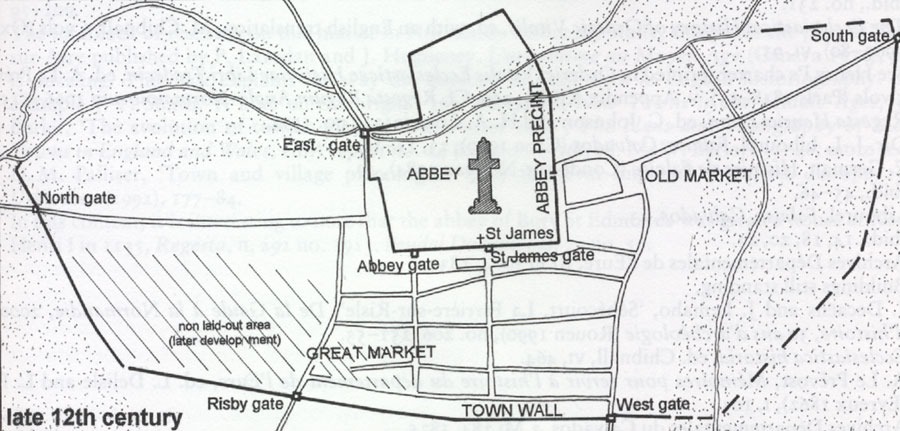
It seems that internal church conflicts in "promises, promises" is heavely influenced by the Biography of Samson wrote by Jocelin, including the problems with the Prior and the cellar. So Next time I will change the year and not the abbot. I have the source of this somewhere. So the interesting part is that Jocelin is a monk narrating what happened to Samson. You can also find historical maps of the town and the abbey

The break, for me, is substantial: the Stone of Guarding in possession of a powerful institution, possible sharing of hermetical knowledge through the - unfinished - book. This happens in the city where the Magna Carta was Signed. This "abbout" has the equivalent political power of a Cardinal. So causing trouble in this place with this kind of person would require lots of effort from the Order to resolve.

In my mind Stephen was trying to secure wealth, not only for himself, but also for the fight with Spinus Nigrus. What happens depends to the playes. In the bad ending Timor keeps all, in the good ending the players keeps the stone and lab texts.

Maybe someday I work on a more compatible "promises, promises" 5ed. Maybe.

For me there are too many fixes and workarounds for this to function. My suggestion? Take a look at the "Twelfth Night" saga, it is very similar in theme with what you seek. I suggest starting by the second chapter with the invitation from Azenis - the players just passed theur gauntlets and because of this were invited by Azenis to bring back Lux ex Tenebris from winter. Lux ex Tenebris even has a Tower lol. Some adventures that I see fit with this saga are "Pact of Pasaquine" and "Broken Covenant of Calebais". You can make Azenis the last of Calebais - mixing the two, with the players reclaiming Calebais and from there running "Twelfth Night". Pasaquine can be the place from where the satyrs near Calebais kidnaped people with the help of Lise. I really like the pact of pasaquine: gives a solid nearby village full of plots for magi, companions and grogs.

I love to role-play this Hoplite NPC... He is there just to make the scene more tense. Smiling and eating looking eargly for the PCs while the Timor's wrath may be over their heads, and if things start to look better for the PCs - and for his fun - he starts just to fumble the food visibly moody. The players reactions to these descriptions - that I use as a kind of thermometer for how good the conversation with Timor is going - are always fun for all, even when tense.

I will take a look! I was planning to run "Twelfth night" at Normandy! Thanks

Ah, thanks. It didn't seem to have anything too major to figure out on the fly, but better to have compatible stuff for sure.

Nah, we're Finnish, so luckily not a issue. (For any Finns following, you can check out my campaign page if you want.)

It depends on how much handwaving and improvising you're willing to do. Rules have changed between editions, and some things don't make sense anymore. I'm currently doing another pass to fix a few things I ignored in the first conversion, it should be finished in a few days.

Yeah, I only realized after doing a bit more research that the Abbey is supposed to be Bury St Edmunds and that Samson was the actual abbot (though only up to 1211 in our history). This should probably be noted in the scenario description.

Yeah, if anyone does update it for 5th edition, at least add a few example spells that the two use, with their basic scores, just to show the players how outmatched they were.

A fair storyguide, IMO, uses Jocelin here to warn about this outcome (I mean, Jocelin is explicitly included in the scenario to be used this way) so at least the players can make an informed choice.

I think it's still a useful addition; some player's inclinations run that way, and it's good to take that kind of approach to the situation in to account.

Yeah, I'm likely going to change things so that Jocelin just brings Stephen a message from one of his allies in Rhine, this causes Stephen to panic and try to figure out experimental solutions that cause his final twilight. When the players investigate after dealing with the twilight effects, they can read the message, then Jocelin puts two and two together and tells from some other info he has that the pair are probably arriving soon – maybe a couple of days, maybe a week?

Yes, I'll be adding that translation from David about their names to my notes. :downcast_face_with_sweat: I don't really see a difference in description or characterization for Jocelin, though – they seem very similar.

Hmm, I found a version. Probably not going to read it, though; I'll trust that the writer of Promises, Promises took the best parts for this scenario. (Not helpful for the discussion that we have the fictional Jocelin the Redcap and the historical Jocelin the author monk. :expressionless_face: )

Yeah, this explains better why Stephen's actions are so badly in breach of the code and why the Quaestior is being so strict; this wasn't a random lesser known local abbey as I first thought.

The writer of Promises, Promises wrote it in a couple of days because he had been asked to write an Ars Magica scenario urgently for GenCon UK. He had just read Jocelin of Brakelond, though.

Just question - does Stonehenge give Quesitors additional rights? Because taking sigil from magus for something like "not understand responsibilities" look little against whole Hermetic law

Well, not legally, but at the time the scenario was written (before Heirs to Merlin) I believe the status quo of the Tribunal was: "The Tribunal's senior Quaesitor is a member of Blackthorn and with their collusion, the only law in Stonehenge is what Blackthorn wants".

Although by the time of Heirs to Merlin, the situation has normalized somewhat, Blackthorn is counterbalanced by other powerful covenants. Hermetic law is still heavily politicized, but no longer a complete mockery.

A fair storyguide, IMO, uses Jocelin here to warn about this outcome (I mean, Jocelin is explicitly included in the scenario to be used this way) so at least the players can make an informed choice.

I've done this sometimes, but they still decided to just wait.

The short anwer is no, the long one is a lot more complicated.

The question here is that even the unaction could place the Order in a bad mood with the Church. AND it is an one shot scenario. So this was my way of describing the results of the decision of the players, a reminder that decision of not acting is an action in itself and has consequences.

And here a more profound discussion: What libelus was doing was a breach of the code, and at the hermetic code the only punishment is death. Period. And here enters the peripherical code: Not all punishments must result in death. The interesting part is that there is a part of the scenario precisely discussing the peripherical code in the form of handouts about findings in a book about the peripherical code and letters.

In my understanding, if this was not a one-shot session, probably I would think about other punishment, or, the players could have a say on this on the nest Tribunal, where the decisions of Timor would be ratified.

"The Tribunal's senior Quaesitor is a member of Blackthorn and with their collusion, the only law in Stonehenge is what Blackthorn wants".

The saga we are playing now is more or less in this direction. Blackthorn managed to secretly kill the Quaesitor that was in their way after the last tribunal, and it is almost open war, with both sides using Lords for proxy warfare. One magus of the covenant just married Richard Marshal, after an atempt by Blackthorn to murder both. Imanola was also mudered by Blackthorn. The redcaps not aligned with Blackthorn were killed or are now forced to work for them.

Total political caos in a political focused game. In other words: fun xD

And was the book good? :wink:
You have done a great work in a couple of days. Thanks

Oh, oops, hadn't checked the credits. Thanks for Promises, Promises, and I hope you don't mind the marginalia I'll be creating. :sweat_smile:

One question came to mind while going through the scenario, though: What was the thought behind adding the correspondence to William & Charles about trading for books? As a side tidbit of info, it's fine, but the handouts, at least to me, seemed like a bit of a red herring... unless it's a reference to something Jocelin of Brakelond wrote about? (I'm translating the Charter, the Lab Text and correspondence with Samson into Finnish to give as handouts; the other three I won't as they don't seem to really add to the situation at hand...)

As I recall, they were a red herring.

And please go ahead with the marginalia. It's very in paradigm, after all!

Just to note, I've moved the Orphans of Merlin setting PDFs to the Yosano Patreon - https://www.patreon.com/collection/831954?view=expanded - still free, no sign-in required.